From Research to Real-World Systems
2025-03-07
How My Work at Bloorview Shaped the Way I Build and Lead Technical Work
Before joining Stryker to implement systems across healthcare organizations, I spent several years at the Bloorview Research Institute as a Research Project Manager, contributing to applied research within the PROPEL Lab (PRototyping, Optimization, and Performance Evaluation Laboratory) under the supervision of Dr. Jan Andrysek.
This period shaped how I think about systems, decision-making, and technical direction. It laid the foundation for how I approach complexity, tradeoffs, and long-term impact in technical environments.
This post serves as a high-level reflection on that experience. Future posts will explore individual research initiatives and technical implementations in greater depth.
The PROPEL Lab: Applied Research With Real-World Impact
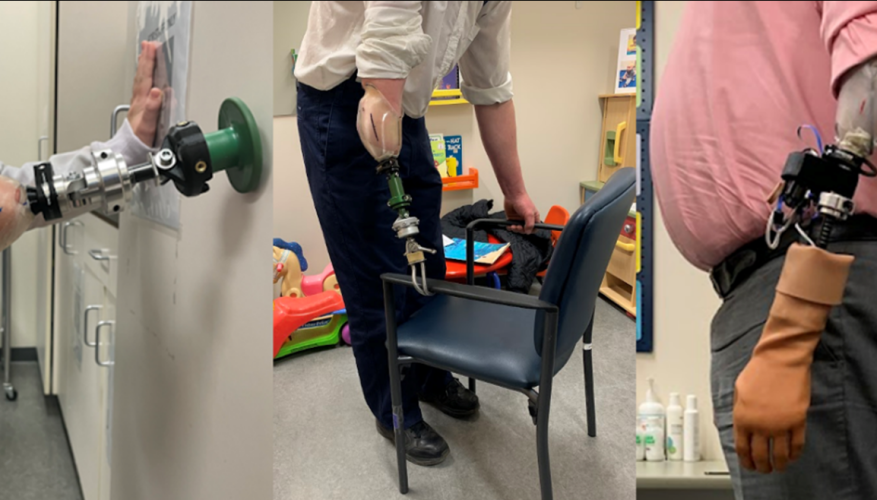
The PROPEL Lab focuses on advancing assistive technologies through engineering, biomechanics, and human-centered design. The work spans:
- Prosthetic and orthotic device design
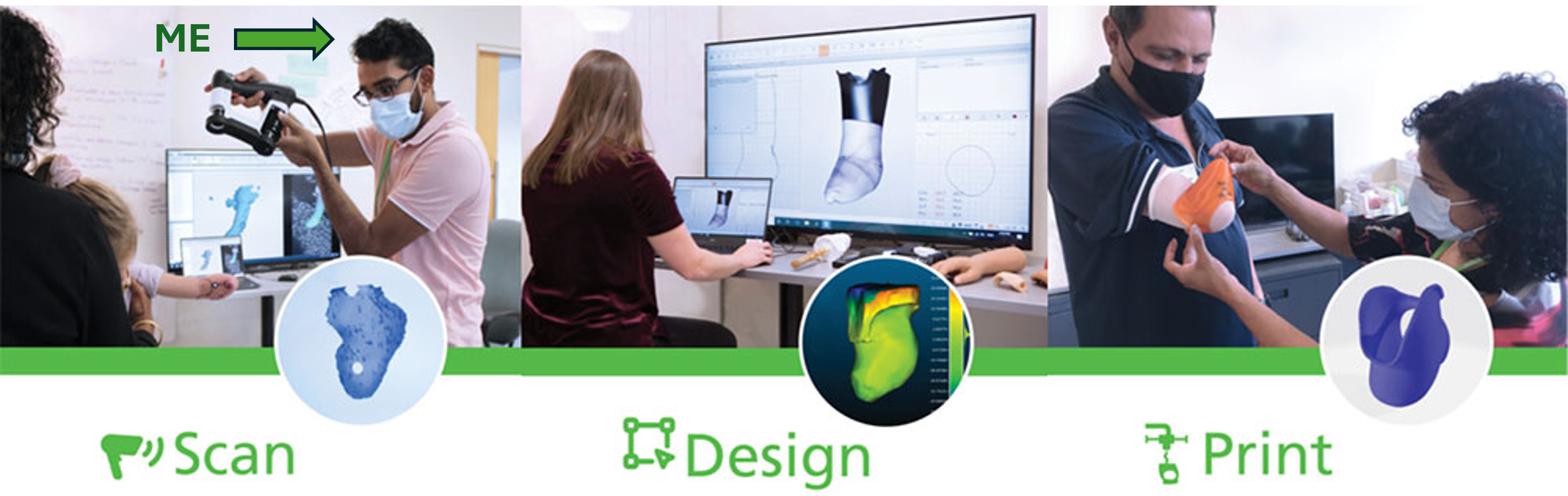
- Digital workflows for clinical assessment and fabrication
- Sensor-based data collection and biomechanical analysis
- Evaluation of human–device interaction and performance

Research in this environment sits at the intersection of technology, healthcare, and usability. Solutions must be technically sound while remaining practical for real-world deployment. Above all, the work is grounded in improving outcomes for individuals who rely on these technologies in daily life, which was incredibly rewarding.
Shaping Research Direction and Program Execution
My role extended well beyond executing experiments. I supported the strategic direction of research initiatives, working closely with the lab’s principal investigator to define priorities, shape project scope, and align technical execution with long-term research goals.
This included:
- Translating high-level research questions into structured, testable workflows
- Supporting study design decisions that balanced rigor, feasibility, and clinical relevance
- Identifying opportunities to standardize and scale experimental methods
- Guiding decisions around tools, platforms, and technologies worth long-term investment
Much of this work mirrors how complex technical programs operate in industry. It required alignment across people, funding constraints, timelines, and research objectives — all while adapting to new findings as they emerged. These efforts were often supported through competitive grant funding, requiring careful coordination between scientific vision, technical feasibility, and program execution.
In the feature The Future of Orthotics and Prosthetics is Here, the team’s work was recognized for securing a major CIHR grant to evaluate digital versus traditional orthotic technologies. This milestone reflected years of coordinated technical and programmatic development across research, clinical, and operational domains. My role centered on acting as a connective layer between clinical and research teams—translating technical and clinical requirements, aligning stakeholders around shared objectives, and supporting prioritization across parallel research initiatives and patient-care responsibilities.

Technical Contributions and Skill Development
Across multiple projects, I developed a technical foundation that continues to inform my work today.
Data and measurement systems
I worked with experimental datasets derived from motion capture, pressure sensing, biomechanical measurement systems, and 3D scanners. This required careful attention to data quality, repeatability, and interpretation, reinforcing the importance of reliable pipelines and defensible results.
Digital workflows and tooling in prosthetics and orthotics
A major focus of my work involved modernizing prosthetics and orthotics workflows through the introduction of 3D scanning, CAD, and additive manufacturing technologies. These initiatives reduced production timelines and improved reproducibility, while also revealing the practical challenges of introducing digital tooling into established clinical environments.
This work ultimately contributed to measurable efficiency gains and improved patient experience, while maintaining clinical rigor.
Human-centered and society-centered system design
A consistent theme across projects was balancing technical performance with human, cultural, and societal realities. While advanced technologies such as sensor-rich or AI-driven prosthetic systems show enormous promise, they must remain accessible, maintainable, and scalable to deliver meaningful impact.
Designing within these constraints reinforced the importance of practicality, sustainability, and trust.
Research Operations, Grants, and Lab Management
In addition to technical contributions, I supported the operational backbone of the research program.
This included:
- Contributing to grant writing and funding proposals, helping secure over $4M in research funding
- Supporting budget planning, forecasting, and resource allocation
- Assisting with staffing, onboarding, and cross-disciplinary coordination
- Supporting procurement and deployment of specialized research equipment
These responsibilities provided a systems-level view of how research initiatives are sustained over time, balancing innovation with accountability and operational constraints.
Why This Experience Still Matters
The work at Bloorview reinforced a mindset that continues to shape how I approach technical challenges today:
- Build systems that scale beyond a single use case
- Treat uncertainty as a design constraint rather than a blocker
- Align technical execution with real human needs
- Make informed decisions that hold up under scrutiny
These principles guide how I evaluate problems, design solutions, and contribute to complex, multi-stakeholder environments.
Selected Research Areas and Publications
The following publications represent the types of work I contributed to during this period. Future posts will explore these in more detail.
- Evaluating the reliability of non-contact scanning for transradial residual limbs
- Understanding adoption of digital workflows in orthotic and prosthetic practice
- Evaluating vibrotactile and auditory biofeedback for gait symmetry
- Assessing pressure sensor performance at the body–device interface
- Exploring data-driven approaches to prosthetic socket design
Full publication list available on my ResearchGate profile:
https://www.researchgate.net/profile/Harry-Sivasambu
This phase of my career laid the groundwork for how I approach complex systems today — technically, strategically, and collaboratively. The tools may evolve, but the underlying principles remain consistent.